
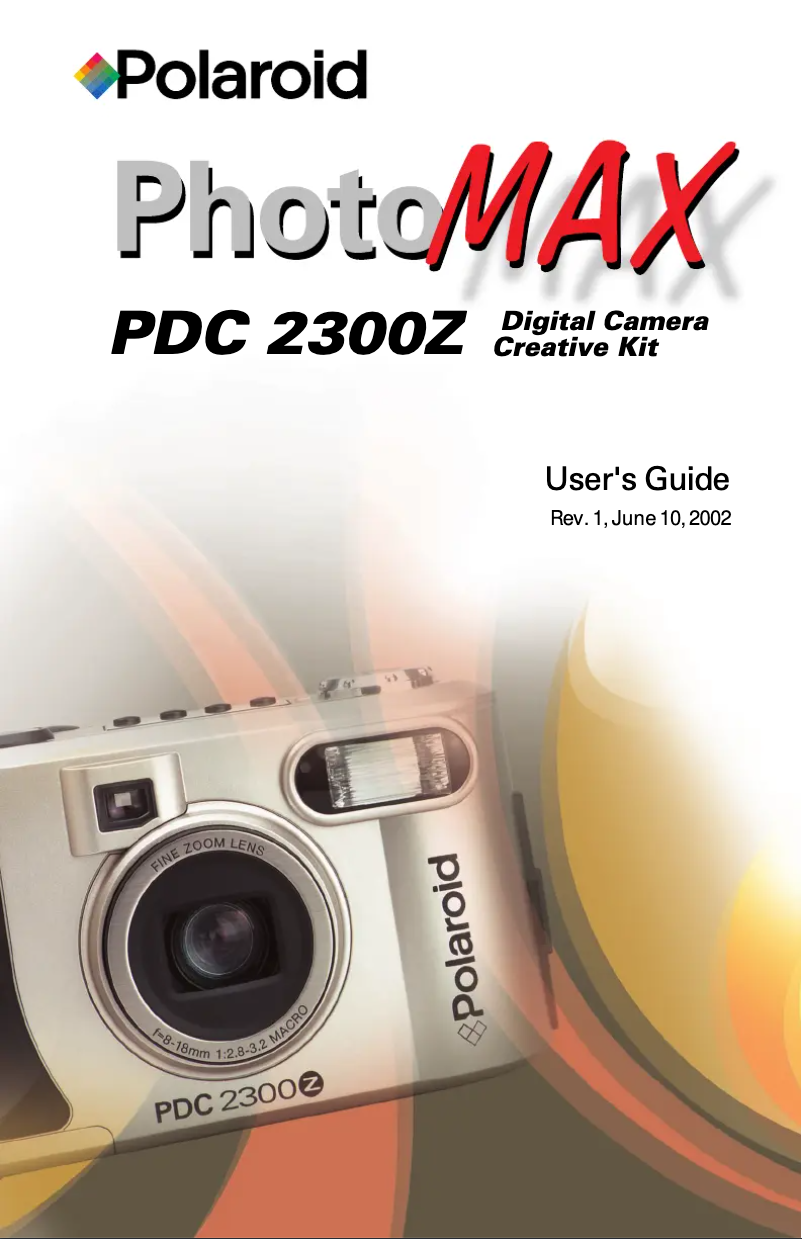
Manual of product PhotoMax PDC 2300Z
Editorial note
The Polaroid PhotoMax PDC 2300Z is a camera that combines the reputation of the Polaroid brand with an accessible user experience, thanks to its intuitive design and a provided user manual. Its compactness makes it an ideal companion for travel, allowing for the easy capture of precious moments. The image quality, while recognized, may not match that of modern digital cameras, which may disappoint some users in search of detail and sharpness. However, the PDC 2300Z has some drawbacks. The user interface may seem unintuitive for novices, making it sometimes tricky to handle. Additionally, photo storage is limited, requiring frequent transfers of images to other devices. The lack of advanced features, such as manual mode, may frustrate photographers looking for increased creative control. Finally, the battery life is insufficient for prolonged use, leading to frequent recharges during photo sessions. In terms of value for money, the Polaroid PhotoMax PDC 2300Z proves to be interesting, especially for beginners. Although it lacks some features available on more expensive models, it remains a wise choice for those who wish to explore the world of photography without breaking the bank.Score details
User experience
The user experience is generally satisfactory, thanks to an intuitive design and an included user manual, but the interface may be considered not very intuitive for beginners.
Performance
The performance is acceptable, but the image quality may be inferior to that of modern digital devices, limiting the detail and sharpness of photographs.
Battery life
The battery life is insufficient for prolonged use, requiring frequent recharges during photo outings.
Design
The design is compact and attractive, making it easy to transport, which makes it an ideal device for travel.
Features
This model incorporates interesting technological innovations, but the lack of advanced features may disappoint photographers looking for more creative control.
Value for money
The Polaroid PhotoMax PDC 2300Z offers good value for money, especially for photography beginners, although it may lack some features compared to more expensive models.
Advantages
Image quality recognized by Polaroid
Ease of use for beginners
Advanced features for a better experience
Versatile for various types of photos
Compact and easy to carry
Disadvantages
Inferior image quality compared to modern devices
Non-intuitive user interface
Limited storage, frequent transfers needed
Lack of advanced features
Insufficient battery life
Technical Specifications PhotoMax PDC 2300Z
General Information
-
ModelPHOTOMAX PDC 2300Z
-
Brand
-
Category
-
Type
-
SKU1807933
-
MPN1807933
Frequently Asked Questions
Is the manual for the Polaroid PhotoMax PDC 2300Z available in French?
Similar products


More product categories from brand Polaroid
More product types from brand Polaroid


Presentation of product PhotoMax PDC 2300Z specifications from brand Polaroid
General Information
The Polaroid PhotoMax PDC 2300Z is a camera from the renowned brand Polaroid, known for its commitment to quality and innovation in the field of photography. This model combines performance and user-friendliness, providing a smooth and enjoyable user experience, whether for enthusiasts or budding photographers.
Advantages
This model stands out for its superior image quality, inherited from Polaroid's expertise, ensuring sharp and precise photographs. Its intuitive design makes it easy to handle, making it accessible even to beginners. Furthermore, it incorporates technological innovations that enhance the capturing experience, allowing you to capture precious moments with ease. Its versatility makes it an ideal choice for different types of photography, whether it be portraits, landscapes, or group photos. Additionally, its compactness makes it easy to carry, perfect for accompanying your travels and outings.
Disadvantages
However, the Polaroid PhotoMax PDC 2300Z has some limitations. The image quality may be less effective than that of modern digital cameras, which can affect the level of detail and sharpness of the shots. The user interface may also seem unintuitive for novice users, making it more complex to handle. Moreover, the photo storage capacity is limited, requiring frequent transfers to other devices to free up space. The absence of advanced features, such as manual mode or white balance adjustments, may disappoint photographers looking for increased creative control. Finally, the battery life may prove insufficient for extended use, leading to frequent recharges during photo outings.


